
Discover the inspiring projects successful in securing funding as part of the 2025 Amicus Ignite funding programme. Each initiative reflects a shared commitment to improving the lives of people living with Pompe disease.
Scroll down to discover the recipients, their projects and hear from the judging panel.
Funded and contracted recipients are included on this page.
Healthcare Institutions
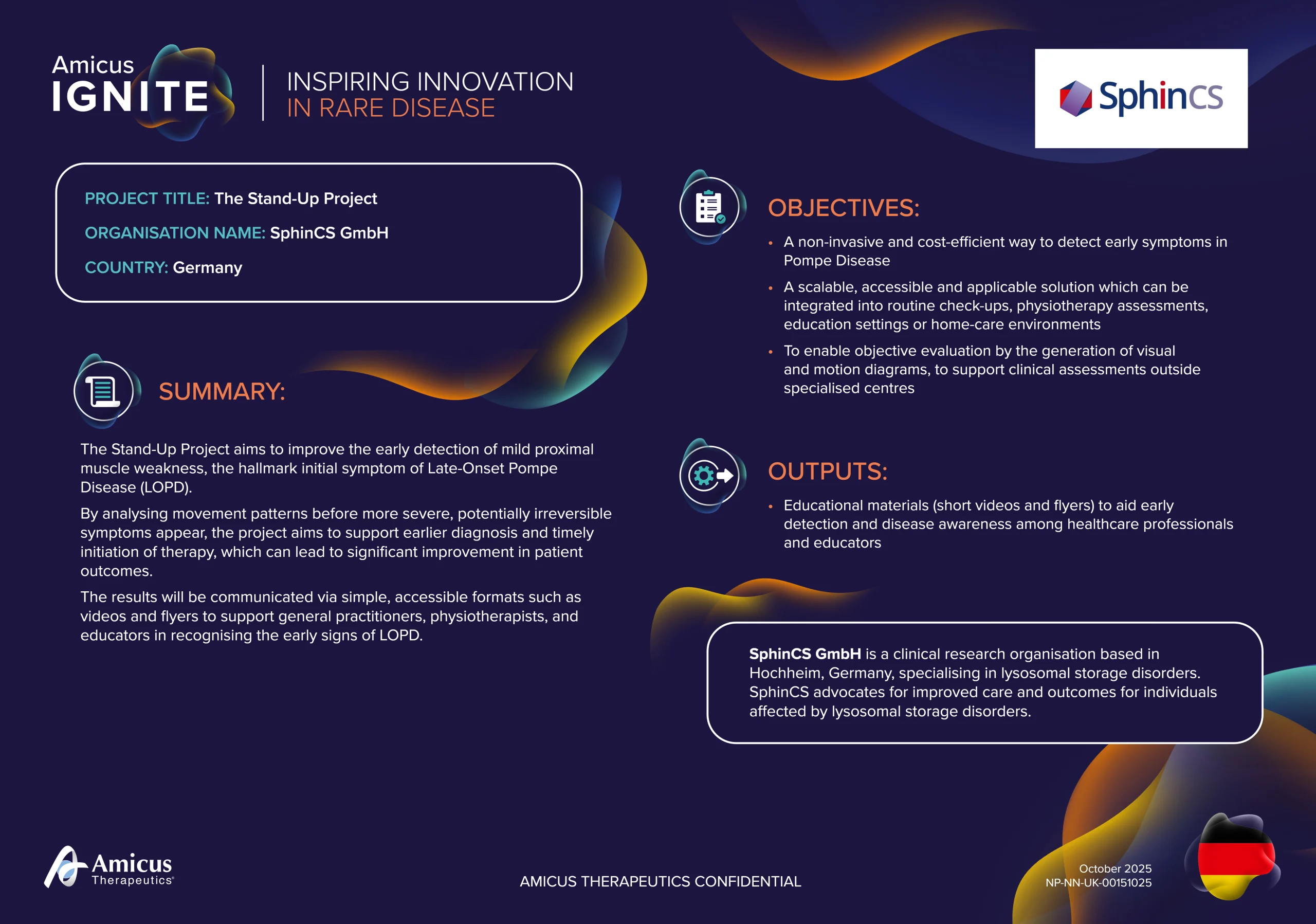
The Stand-Up Project
SphinCS GmbH
The Stand-Up ProjectSphinCS GmbH
The Stand-Up Project aims to improve the early detection of mild proximal muscle weakness, the hallmark initial symptom of Late-Onset Pompe Disease (LOPD).
By analysing movement patterns before more severe, potentially irreversible symptoms appear, the project aims to support earlier diagnosis and timely initiation of therapy, which can lead to significant improvement in patient outcomes.
The results will be communicated via simple, accessible formats such as videos and flyers to support general practitioners, physiotherapists, and educators in recognising the early signs of LOPD.
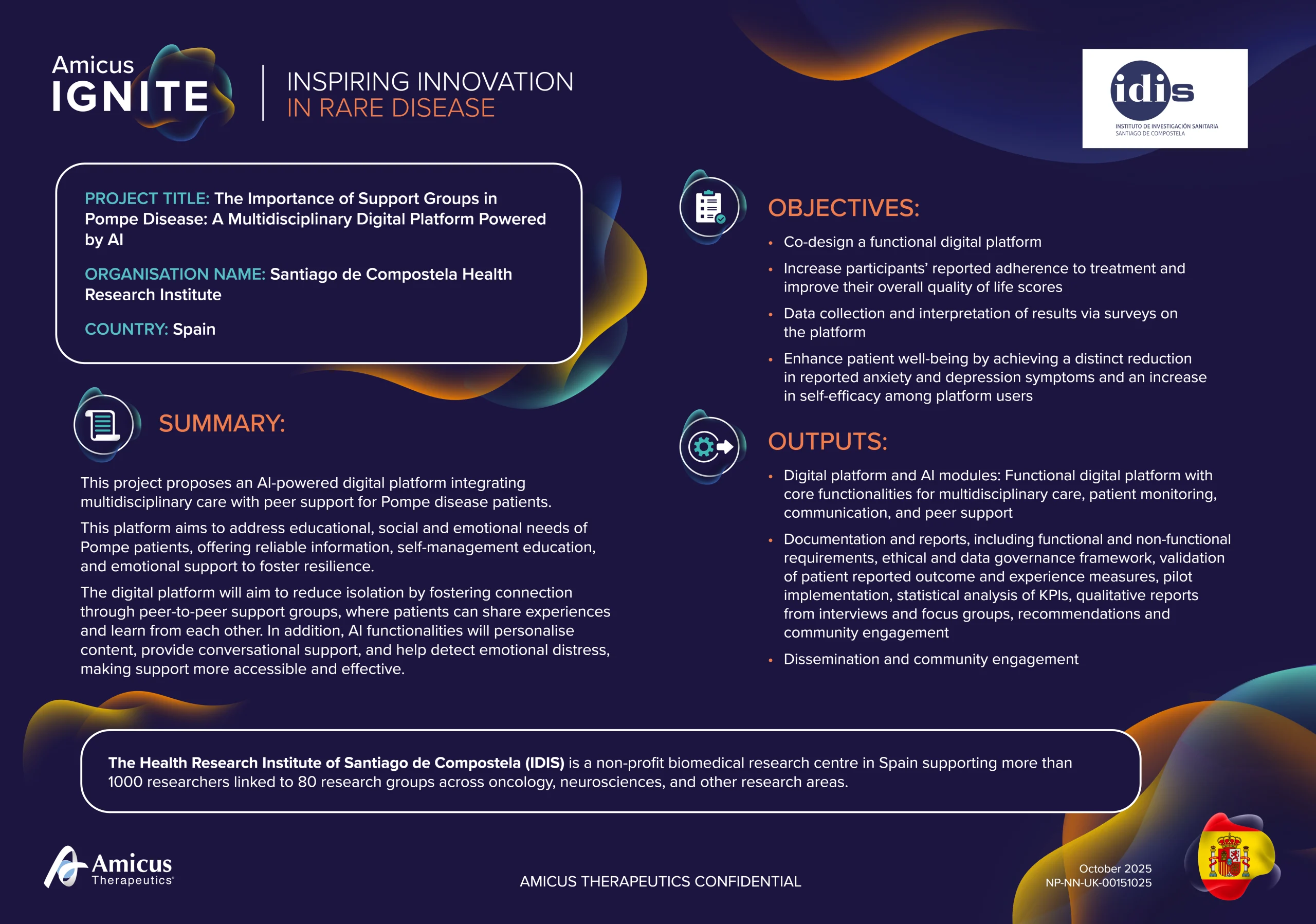
The Importance of Support Groups in Pompe Disease: A Multidisciplinary Digital Platform Powered by AI
Santiago de Compostela Health Research Institute
The Importance of Support Groups in Pompe Disease: A Multidisciplinary Digital Platform Powered by AI
Santiago de Compostela Health Research Institute

This project proposes an AI-powered digital platform integrating multidisciplinary care with peer support for Pompe disease patients.
This platform aims to address educational, social and emotional needs of Pompe patients, offering reliable information, self-management education, and emotional support to foster resilience.
The digital platform will aim to reduce isolation by fostering connection through peer-to-peer support groups, where patients can share experiences and learn from each other. In addition, AI functionalities will personalise content, provide conversational support, and help detect emotional distress, making support more accessible and effective.
Academic Insitutions
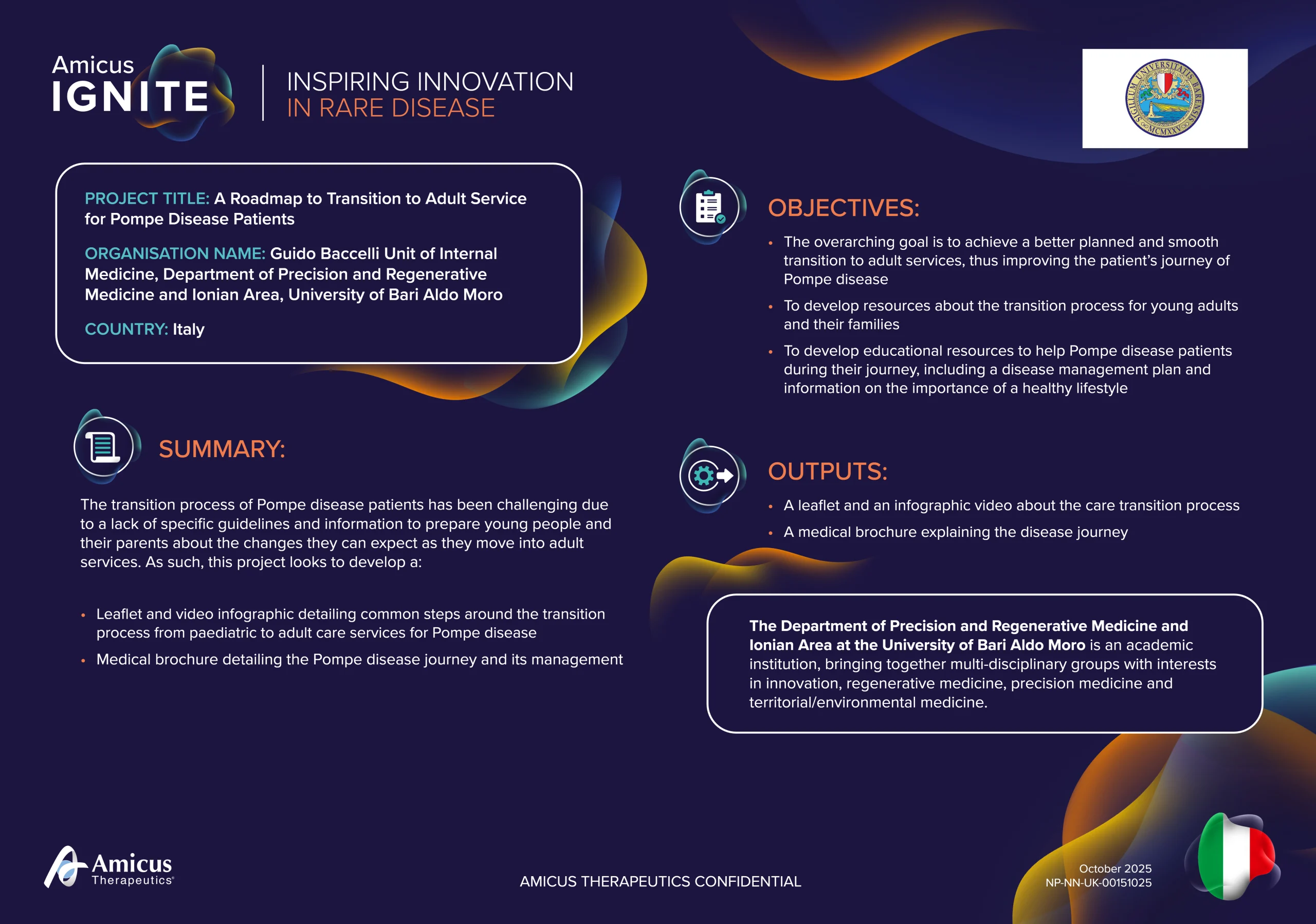
A Roadmap to Transition to Adult Service for Pompe Disease Patients
Guido Baccelli Unit of Internal Medicine, Department of Precision and Regenerative Medicine and Ionian Area, University of Bari Aldo Moro
A Roadmap to Transition to Adult Service for Pompe Disease Patients
Guido Baccelli Unit of Internal Medicine, Department of Precision and Regenerative Medicine and Ionian Area, University of Bari Aldo Moro

The transition process of Pompe disease patients has been challenging due to a lack of specific guidelines and information to prepare young people and their parents about the changes they can expect as they move into adult services. As such this project looks to develop a:
- Leaflet and video infographic detailing common steps around the transition process from paediatric to adult care services for Pompe disease
- Medical brochure detailing the Pompe disease journey and its management
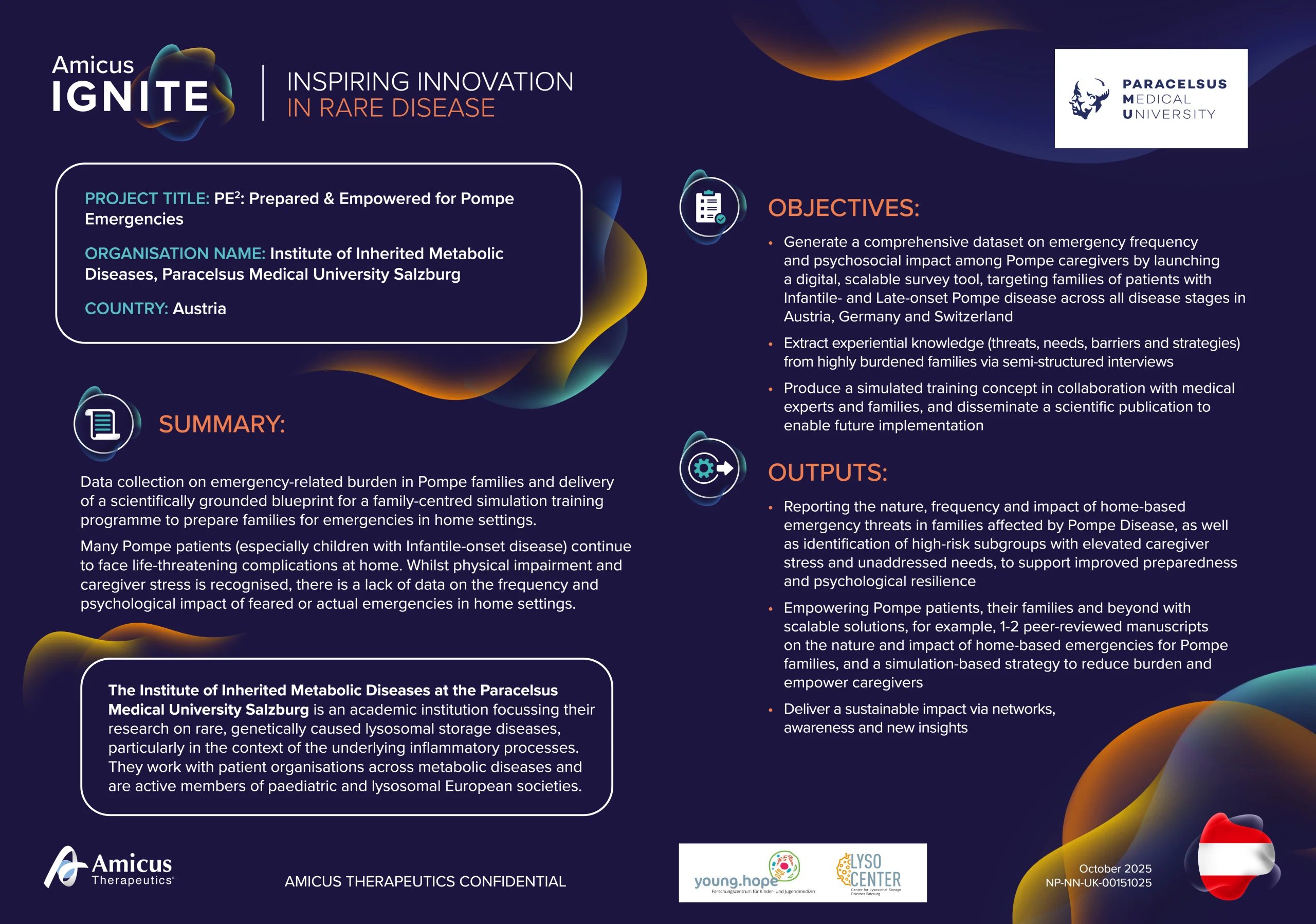
PE2: Prepared & Empowered for Pompe Emergencies
Institute of Inherited Metabolic Diseases, Paracelsus Medical University Salzburg
PE2: Prepared & Empowered for Pompe Emergencies
Institute of Inherited Metabolic Diseases, Paracelsus Medical University Salzburg

Data collection on emergency-related burden in Pompe families and delivery of a scientifically grounded blueprint for a family-centred simulation training programme to prepare families for emergencies in home settings.
Many Pompe patients (especially children with Infantile-onset disease) continue to face life-threatening complications at home. Whilst physical impairment and caregiver stress is recognised, there is a lack of data on the frequency and psychological impact of feared or actual emergencies in home settings.
Patient Advocacy Organisations
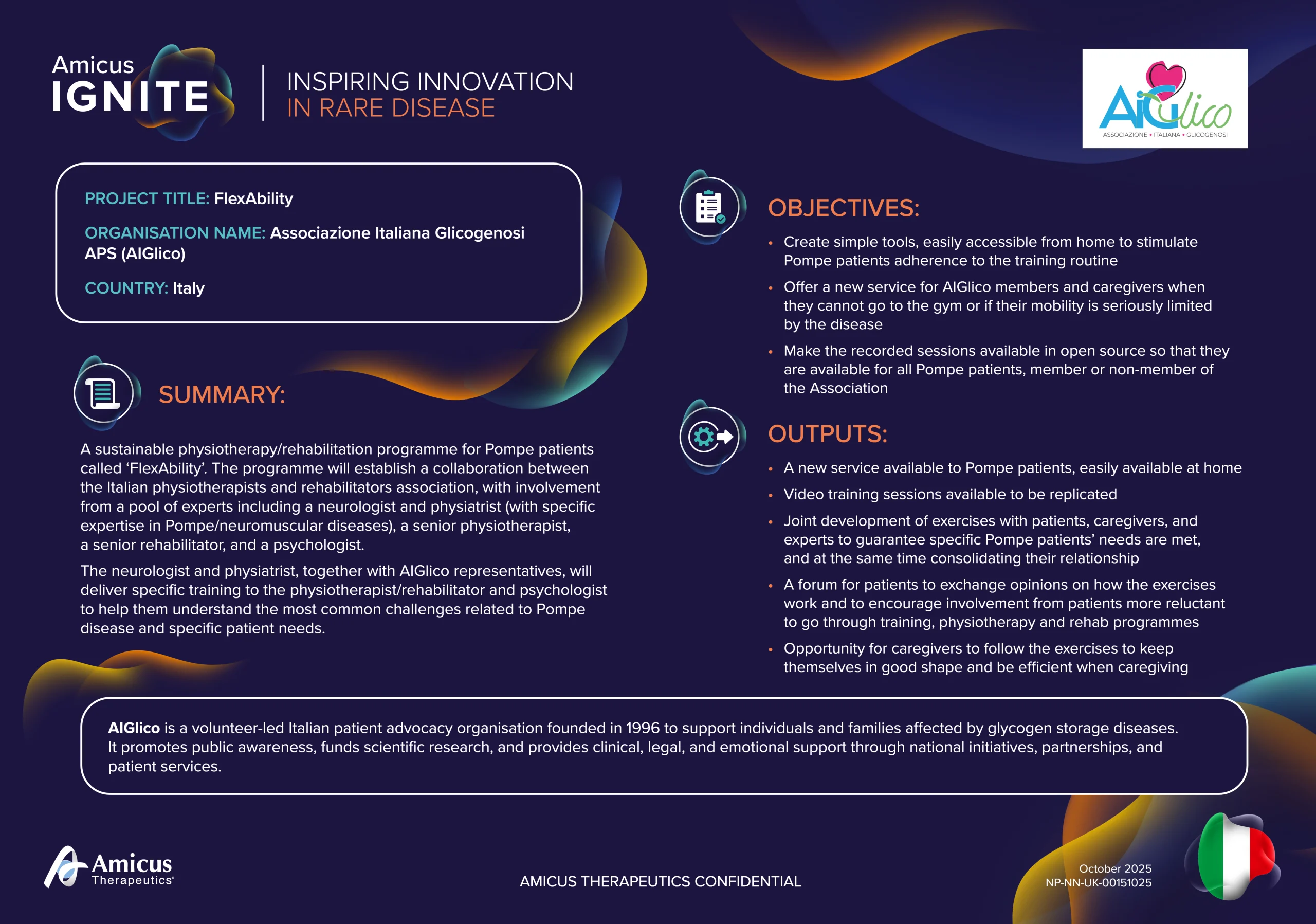
FlexAbility
Associazione Italiana Glicogenosi APS (AIGlico)
FlexAbility
Associazione Italiana Glicogenosi APS (AIGlico)
A sustainable physiotherapy/rehabilitation programme for Pompe patients called ‘FlexAbility’. The programme will establish a collaboration between the Italian physiotherapists and rehabilitators association, with involvement from a pool of experts including a neurologist (with specific expertise in Pompe/neuromuscular diseases), a senior physiotherapist, a senior rehabilitator, and a psychologist.
The neurologist, together with AIGlico representatives, will deliver specific training to the physiotherapist/rehabilitator and psychologist to help them understand the most common challenges related to Pompe disease and specific patient needs.
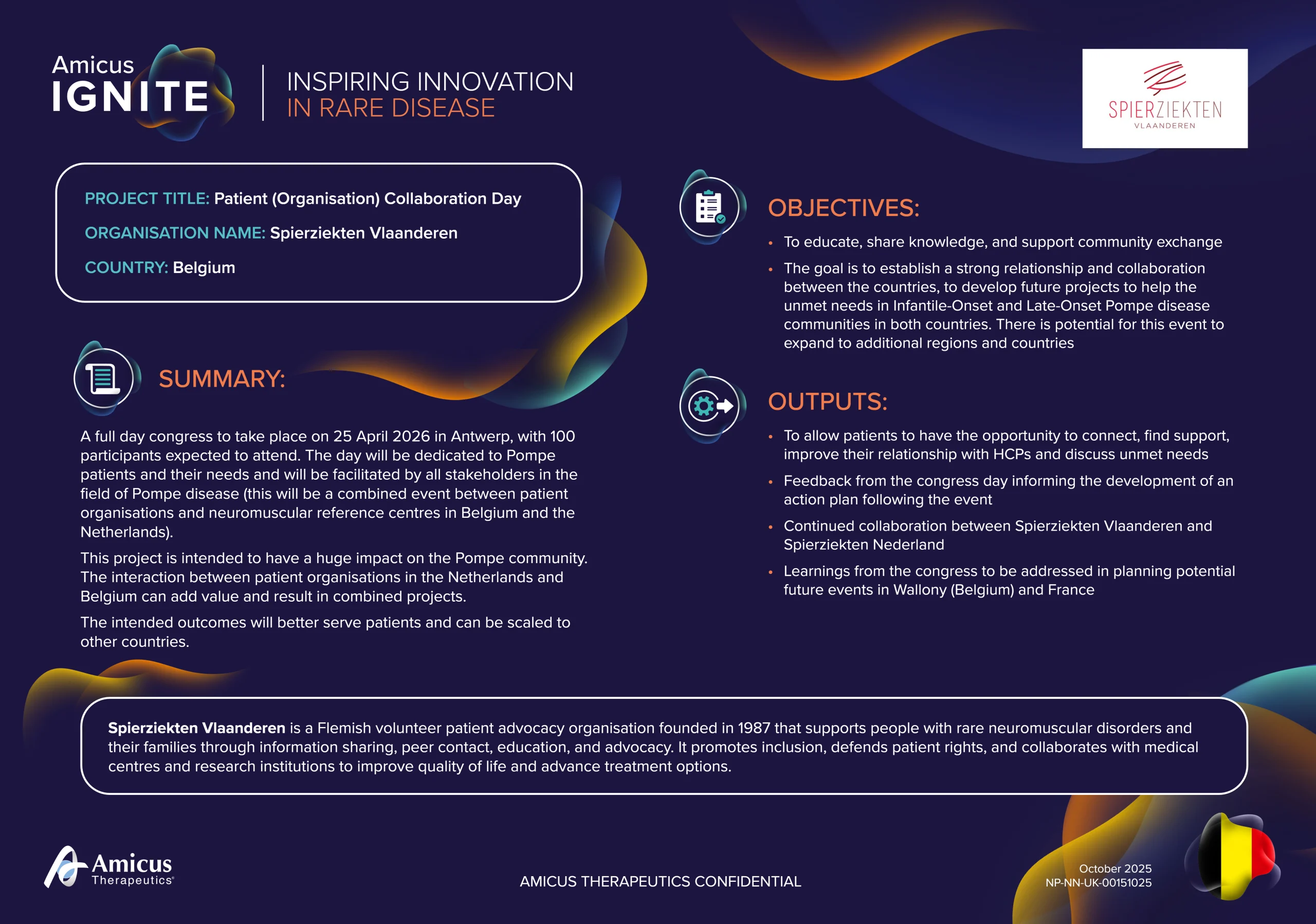
Patient (Organisation) Collaboration Day
Spierziekten Vlaanderen
Patient (Organisation) Collaboration Day
Spierziekten Vlaanderen
A full day congress to take place on 25 April 2026 in Antwerp, with 100 participants expected to attend. The day will be dedicated to Pompe patients and their needs and will be facilitated by all stakeholders in the field of Pompe disease (this will be a combined event between patient organisations and neuromuscular reference centres in Belgium and the Netherlands).
This project is intended to have huge impact on the Pompe community. The interaction between patient organisations in the Netherlands and Belgium can add value and result in combined projects.
The intended outcomes will better serve patients and can be scaled to other countries.
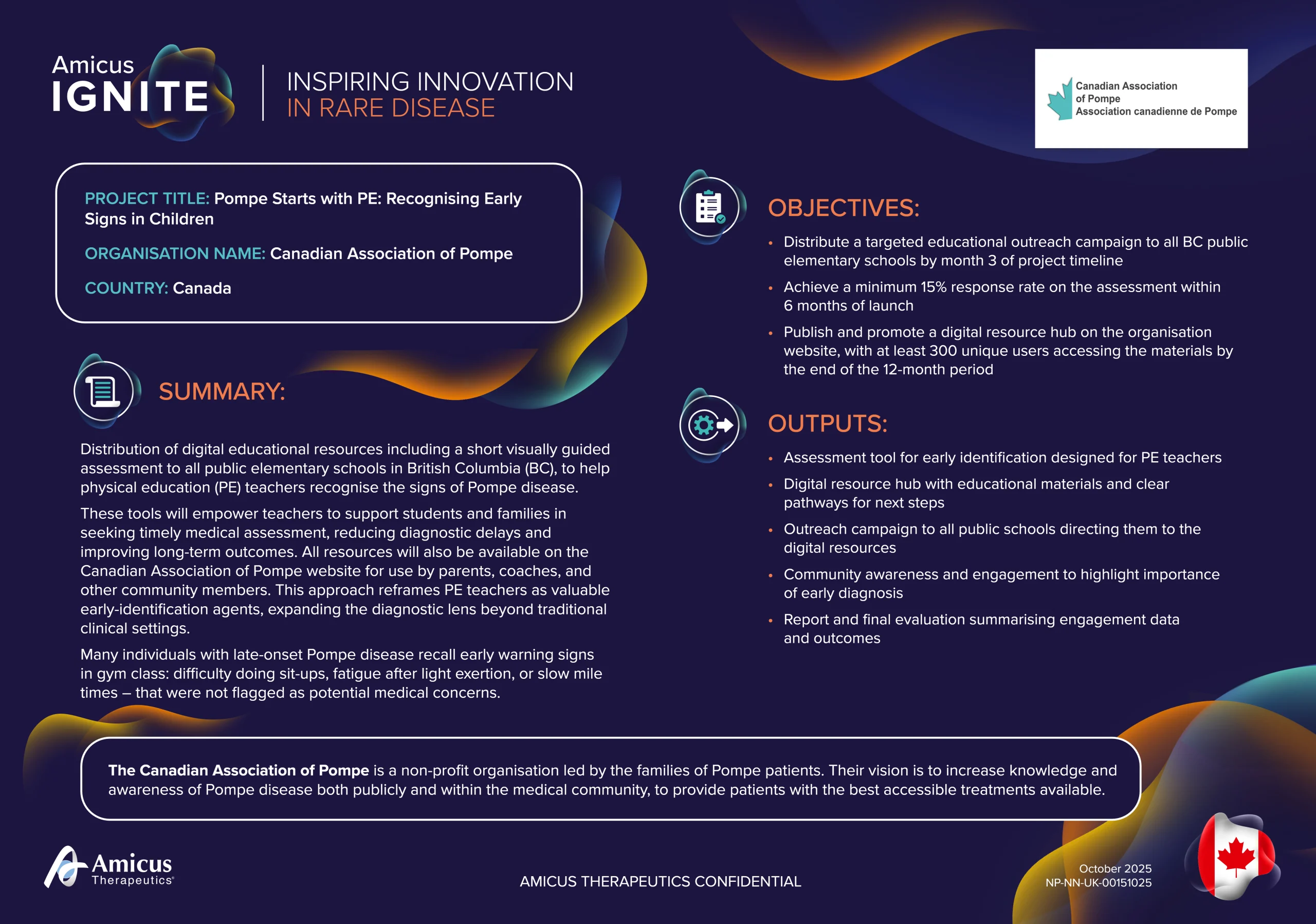
Pompe Starts with PE: Recognising Early Signs in Children
Canadian Association of Pompe
Pompe Starts with PE: Recognising Early Signs in Children
Canadian Association of Pompe
Distribution of digital educational resources including a short visually guided assessment to all public elementary schools in British Columbia (BC), to help physical education (PE) teachers recognise the signs of Pompe disease.
These tools will empower teachers to support students and families in seeking timely medical assessment, reducing diagnostic delays and improving long-term outcomes. All resources will also be available on the Canadian Association of Pompe website for use by parents, coaches, and other community members. This approach reframes PE teachers as valuable early-identification agents, expanding the diagnostic lens beyond traditional clinical settings.
Academic Insitutions
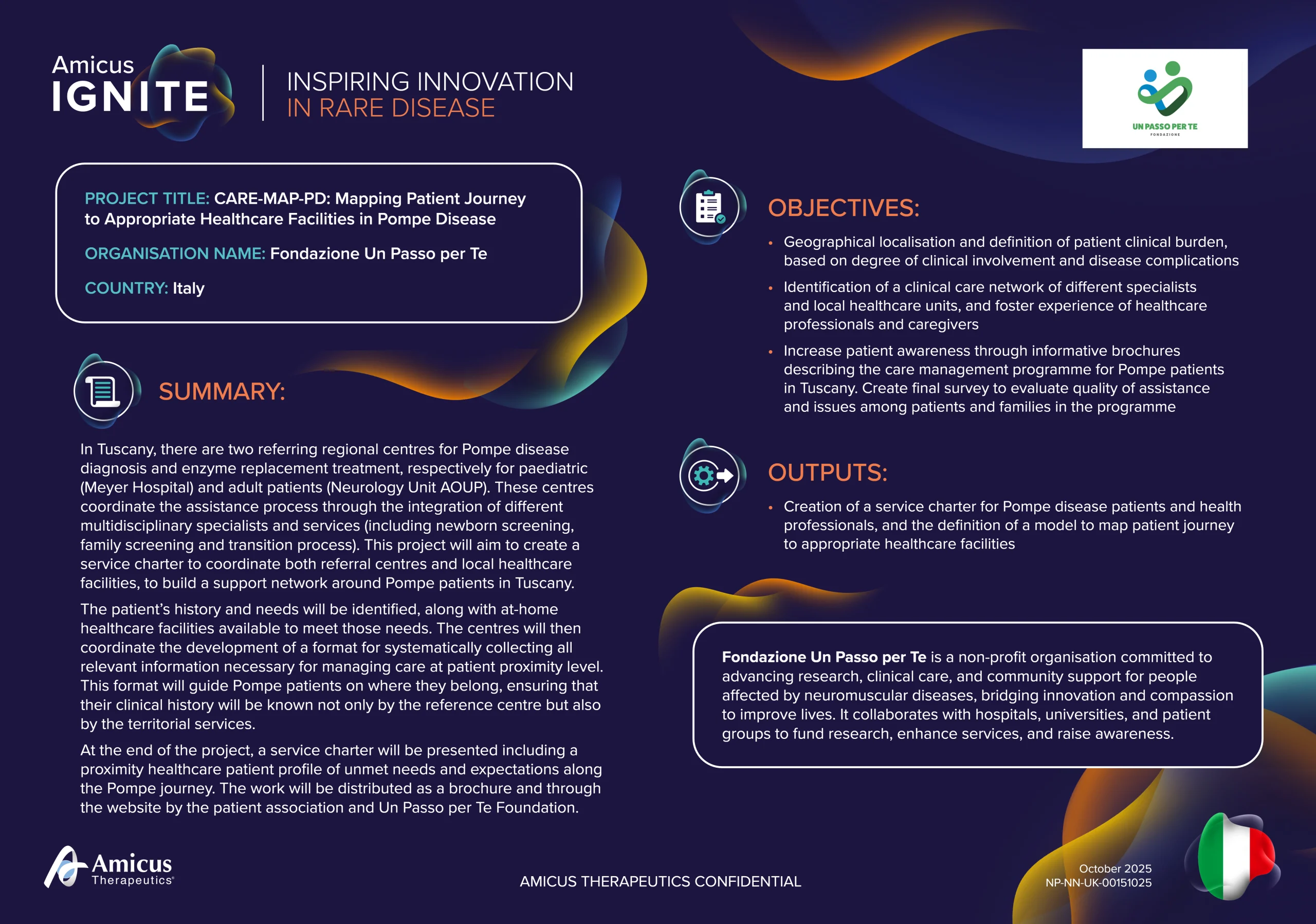
CARE-MAP-PD: Mapping Patient Journey to Appropriate Healthcare Facilities in Pompe Disease
Fondazione Un Passo per Te
CARE-MAP-PD: Mapping Patient Journey to Appropriate Healthcare Facilities in Pompe Disease
Fondazione Un Passo per Te
In Tuscany there are two referring regional centres for Pompe disease diagnosis and enzyme replacement treatment, respectively for paediatric (Meyer Hospital) and adult patients (Neurology Unit AOUP). These centres provide assistance through the integrations of different multidisciplinary figures and different services (including newborn screening, family screening and transition process). This project will aim to create a service charter to coordinate both referral centres and local healthcare facilities, to build a support network around Pompe patients in Tuscany.
At the end of the project, a service charter including a proximity healthcare patient profile of unmet needs and expectations along the Pompe journey will be presented. The work will be distributed as a brochure and through the website by the patient association and Fondazione Un Passo per Te.
Pompe Journey Navigator – A Digital Companion for Patients & Caregivers
Fundación de Neurociencias
Pompe Journey Navigator – A Digital Companion for Patients & Caregivers
Fundación de Neurociencias
Development of a digital companion platform ‘The Pompe Journey Navigator’. The platform will be designed to enhance the care journey for individuals living with Pompe disease and their caregivers, by offering a personalised, AI-driven approach to disease management.
The platform will provide symptom tracking and care pathways, caregiver coaching and training, and access to an AI chatbot and community forum to assist with queries and support.
With Amicus Ignite funding, the organisation will develop a working prototype, pilot test with 50 Pompe patients and caregivers, and refine the platform for broader implementation.
From Diagnosis to Advocacy with Dr. Paul McIntosh
Hear Dr McIntosh share his journey with Pompe disease and his dual role as both patient and neurologist.
Inside the Judges’ Room: Insights & reflections
Hear the judging panel discuss topics including the judging process and community challenges.
- 00:29 A message from Tanya Collin-Histed, CEO International Gaucher Alliance.
- 03:43 Judge’s introductions & sharing something they learnt during the process.
- 13:30 What made certain projects stand out?
- 19:50 Challenges in the Pompe community & opportunities to improve patient care.
- 22:20 What types of projects would you like to see in the future?
- 27:00 Think about fuelling innovation, what would you share which you think could drive change in rare disease?